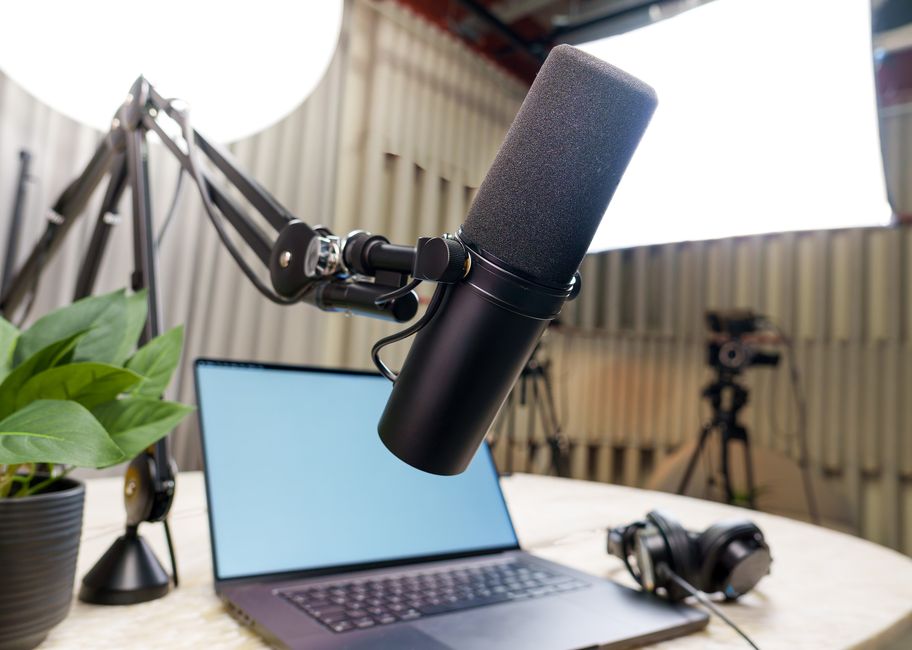
Budget Microphone for Voiceover: The One I Chose
The budget microphone for voiceover candidates I compared for a beginner YouTube channel, their sourced pros and cons, and why I chose the MAONO PD200X.
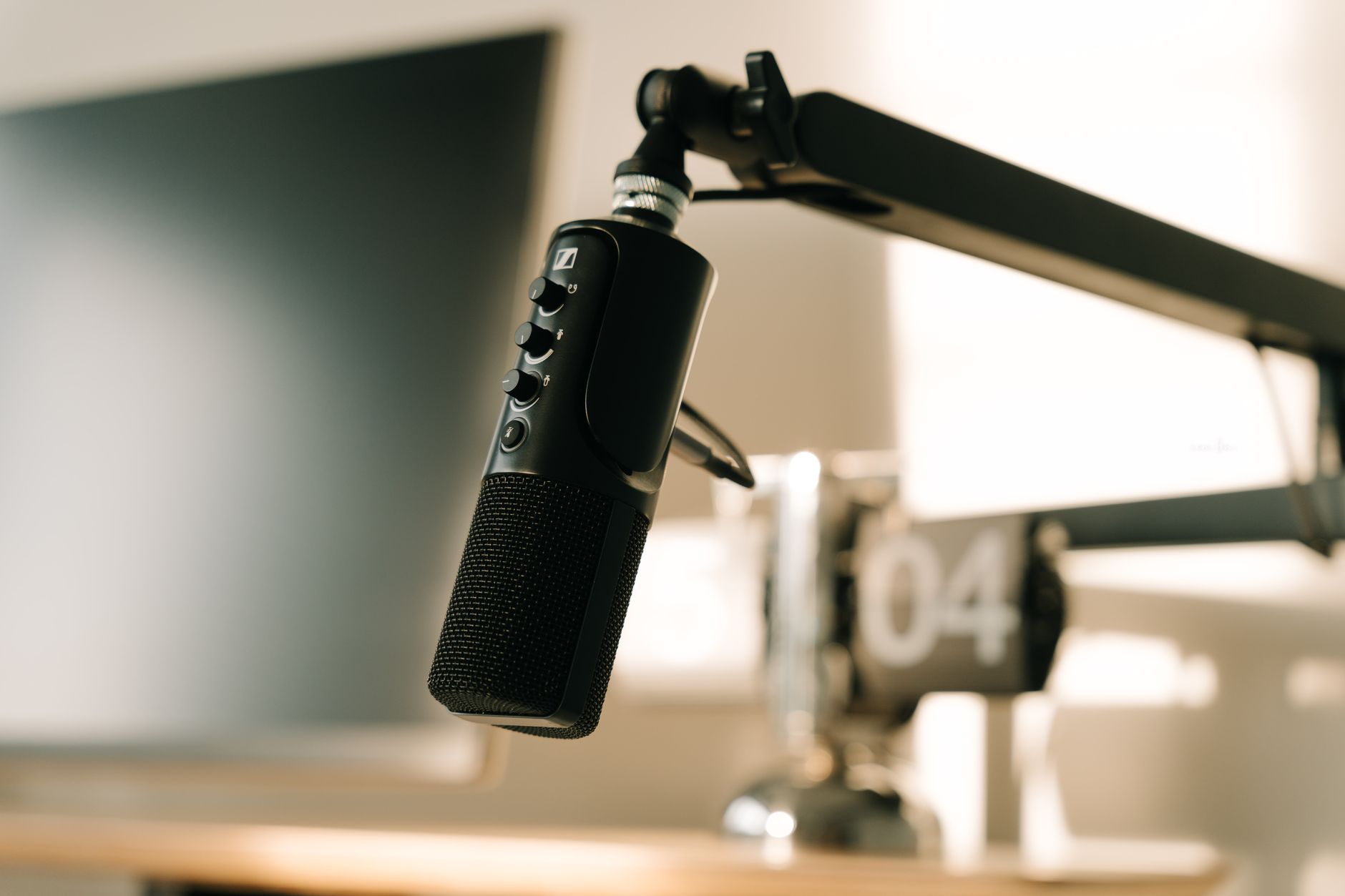
Choosing a budget microphone for voiceover was the next step in kitting out my beginner YouTube channel, which is mostly voice-led with some on-camera videos. If you are at the very start, my guide to how to start a YouTube channel in the UK covers the steps before any kit. This post sets out the candidates I researched, the pros and cons independent reviewers report for each, and the one I chose.
This is a research comparison: everything below about how these mics sound comes from published reviews and manufacturer specs, linked as I go. Links to Amazon UK are affiliate links: if you buy through one, Creator Kit Lab earns a small commission at no extra cost to you. Apart from the Amazon Basics mic, every candidate Amazon UK priced sat at or near the £50-100 band when I compared on 2 November 2026. Prices move daily, so check the current price before you buy.
It is part of my from-nothing YouTube kit series. If dynamic, condenser, USB and XLR are new terms, what is a dynamic microphone? explains them before any mic is named.
Which terms do you need to know first?
- XLR is the three-pin connector professional mics use. An XLR mic needs an audio interface, a small box that turns the mic's signal into digital audio for your computer.
- USB mics have that conversion built in and plug straight into a computer. USB-C is the newer, reversible plug; some older mics use Mini-B.
- Gain is how much the mic's signal is amplified before it is recorded. Too little and your voice records quietly; too much and it distorts.
- Zero-latency monitoring is a headphone jack on the mic that plays your voice back with no delay while you record.
- Cardioid describes a mic that hears mostly what is in front of it and less from behind. My polar patterns guide covers the other shapes.
- Off-axis sound arrives from the side of the mic rather than straight in front.
- Boom arm: an adjustable arm clamped to the desk that holds the mic up near your mouth. A shock mount is a cradle that stops knocks travelling up into the mic.
- 16-bit describes the resolution of the audio a USB mic sends. Higher is better on paper; Gough Lui judges 16-bit enough for voice if levels are set properly.
- DSP (digital signal processing) means effects applied in the mic or its software, such as EQ (tone shaping), a limiter that stops peaks clipping, and a compressor that evens out loud and quiet passages.
What does a desk voiceover mic need to do?
A desk voiceover mic records narration straight into the computer you edit on, rather than leaning on a camera's built-in mic. Three things decided my shortlist.
Dynamic or condenser. A dynamic mic (a moving-coil design that is less sensitive and worked close to the mouth) rejects much of the room around it. A condenser mic (a lighter, more sensitive capsule) picks up reflections, fan hum and background noise along with your voice. The Podcast Host lists a well-treated room as a condenser's requirement and calls a dynamic a good fit for the non-professional rooms most people record in. For an ordinary, untreated room, that points to a dynamic. My guide to soundproofing vs acoustic treatment explains what treating it involves.
USB, XLR or both. A USB mic plugs straight into a computer. An XLR mic needs an audio interface. A hybrid with both lets a beginner start on USB and move to an interface later, so a hybrid keeps the upgrade open.
Working distance. Budget dynamics are close-working mics: Microphone Geeks (an independent microphone review site) recommends about 5-8 cm from the MAONO PD200X. That makes a desk mic a narration tool, which fits a mostly voice-led channel, but not a mic for wide on-camera shots or room-scale shoots, which need a separate wireless or lavalier mic.
Which budget microphones for voiceover did I compare?
My budget was about £50-100. Four mics made the comparison in that band, three of them dynamic USB/XLR hybrids and one a USB condenser. I added a fifth, cheaper condenser below the band, because the most affordable option belongs in any beginner comparison.
| Mic | Type | Connection | Upgrade to XLR? |
|---|---|---|---|
| Amazon Basics Mini USB Condenser | Condenser | USB | No |
| FIFINE AmpliGame AM8 | Dynamic | USB-C + XLR | Yes |
| MAONO PD200X | Dynamic | USB-C + XLR | Yes |
| FIFINE K688 | Dynamic | USB + XLR | Yes |
| RØDE NT-USB Mini | Condenser | USB-C | No |
Amazon Basics Mini USB Condenser
The Amazon Basics Mini USB Condenser Microphone (model AMZ-S6524A, Amazon's own-brand plug-and-play desk mic) is the cheapest way in, priced well below every other mic here. The listing describes a cardioid condenser with a one-tap mute, an adjustable desktop stand and a built-in shock absorber, rated 4.4 out of 5 from about 1,400 Amazon UK ratings when I compared them.
- Pros: BGR reports it performing well above its price for home streaming, podcasting and calls, with negligible latency. Gizmodo Japan (the Japanese edition of the tech news site) found it worked over USB with no driver and judged it a good first mic.
- Cons: BGR is clear it is no studio mic, and Gizmodo Japan rules it out for serious music production. As a condenser, it hears an untreated room more than the dynamics below. It has no XLR output, so there is no upgrade path to an interface, and spec aggregators disagree about whether it has a headphone jack.
Who it suits better: on paper, someone on the tightest budget who records in a quiet room and has no plans to move to an audio interface.
FIFINE AmpliGame AM8
The FIFINE AmpliGame AM8 (a dynamic USB-C and XLR hybrid from Chinese maker FIFINE) ships with a desk stand, windscreen and USB cable. It comes in black, as the cheaper white AM8W, and as the AM8T kit with a boom arm.
- Pros: In Gough Lui's review the sound beat the reviewer's expectations, with good rejection of background and off-axis noise, a warm close-range voice and a quiet USB interface. It has zero-latency headphone monitoring, gain and mute on the body.
- Cons: The same review found a misaligned bracket, a tilt that cannot be locked, a short stand and gain run at maximum, so quiet speakers can record low. USB is 16-bit, and FIFINE's product page confirms no XLR cable is included.
Who it suits better: on paper, a beginner with no stand or arm who wants everything for USB recording in the box. The white AM8W is the cheapest USB/XLR hybrid in this comparison.
MAONO PD200X
The MAONO PD200X (a dynamic USB-C and XLR hybrid from Chinese audio brand MAONO) has an all-metal body and works with MAONO's free Maono Link software. It is also sold as the PD200XS kit with a boom arm.
- Pros: Microphone Geeks scores it 9.1/10 and finds it tuned for voice work, good at rejecting the sound of an untreated room, and free of audible hiss with USB gain at 80-100%. The software adds EQ, a limiter and a compressor.
- Cons: The same review notes a plastic shock mount, no XLR cable, a combined gain and volume knob that takes learning, and software and DSP that work in USB mode only. On XLR, some interfaces need near-maximum gain, which the reviewer treats as normal for a dynamic.
FIFINE K688
The FIFINE K688 is FIFINE's other dynamic USB and XLR hybrid in this band, built around a shock mount rather than a desk stand.
- Pros: APH Networks gives it 8/10 and reports good audio in untreated rooms. Podcastage calls the sound decent for the price.
- Cons: Podcastage names a resonant, hollow sound as its main drawback, and USB is 16-bit. Soundphile notes there is no XLR cable and the shock mount needs a boom arm or stand. The on-body controls work over USB only.
Who it suits better: on paper, someone who already owns a boom arm or stand for its shock mount, and who wants an XLR output.
RØDE NT-USB Mini
The RØDE NT-USB Mini (a compact USB-C condenser from Australian maker RØDE) was my contrast candidate: the condenser in the band, to test the dynamic-first advice against. Amazon UK showed no price for it when I compared on 2 November 2026.
- Pros: Mixdown praises a solid steel body, a strong magnetic mount and a reasonably flat response without harsh sibilance, and calls it a steal. It is class compliant and works with RØDE's free software.
- Cons: In Mixdown's test a fan a few metres behind the mic was clearly audible, the room's echo came through untreated, and rejection weakened beyond 50 cm. It needs EQ to sound its best, and with no XLR there is no upgrade path.
Who it suits better: on paper, someone recording in a quiet or treated room who wants a sturdy USB-C condenser and no interface, ever.
Why isn't the Samson Q2U on my list?
The Samson Q2U (a long-running dynamic USB and XLR hybrid) is The Podcast Host's most frequent beginner suggestion, so I looked at it. To me it looks more like a mid- to upper-range option than a budget one, so I've left it out of this beginner comparison and covered it in my mid-range voiceover mic guide instead. The Amazon Basics condenser took the other end of the scale instead: it should be in any budget or beginner mic comparison as the most affordable option.
Which mic did I choose, and why?
I'm going with the MAONO PD200X. It will fit well onto the stand I bought, and I'd rather have my mic raised than sitting on the desk.
That reason belongs to my setup rather than most readers'. If you are starting from nothing, with no stand or arm, the same mic comes as the PD200XS kit with a boom arm, and the FIFINE AM8 ships with a desk stand in the box. For a wider view across every budget, see the best podcast microphones in the UK.
Frequently asked questions
Is a dynamic or condenser mic better for voiceover at home?
Do I need an audio interface for a budget voiceover mic?
Does the MAONO PD200X come with an XLR cable?
What is the cheapest microphone worth considering for voiceover?
Sources
- The Podcast Host: the best podcast microphones
- Gough Lui: FIFINE AmpliGame AM8 review
- Microphone Geeks: MAONO PD200X review
- Podcastage: FIFINE K688 review
- APH Networks: FIFINE K688 review
- Mixdown: RØDE NT-USB Mini review
- BGR: Amazon Basics USB microphone
- Gizmodo Japan: Amazon Basics USB condenser microphone
- FIFINE: AM8 product page
Microphone polar patterns explained
Gain staging and recording levels

Soundproofing vs acoustic treatment