Portable Lighting Kit for Reels and Short-Form Video
How to light Reels and TikToks anywhere: panel vs ring light vs COB, the specs that matter, placement, flicker fixes and three portable kits.
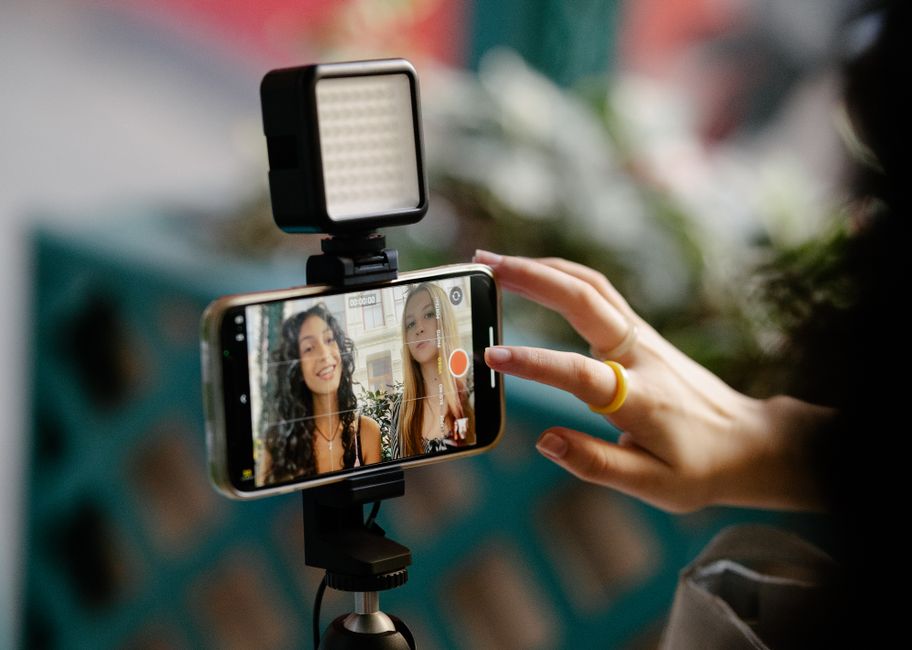
A portable lighting kit for Reels is what separates footage that looks shot on purpose from footage that looks shot in a hurry. Filming short-form video away from a fixed desk - a kitchen, a hotel room, outdoors at dusk - means your light has to travel, run on a battery, and set up in seconds.
This guide covers the four specs that actually matter, the three light shapes to choose between, where to put the light for vertical video, how to handle hotel rooms, kitchens and dusk shoots, why LED footage sometimes flickers, and three kits that fit in a bag. Some links are affiliate links; they never change what we recommend.
What makes a good portable creator light?
Four specs decide whether a light flatters your footage. The first is colour accuracy, measured as CRI (Colour Rendering Index, a 0-100 score of how faithfully a light renders colour). Aim for CRI 95 or higher; below about 90, skin tones drift green or grey.
The second is colour-temperature control. A bi-colour light (adjustable white, roughly 2700K warm to 6500K daylight) or a full RGB light lets you match the light already in the room, which matters more than raw power. The third is real dimming from 1 to 100%, so you set exposure by turning the light down rather than dragging it further away. The fourth is a battery or USB-C power that lasts a full shoot, not fifteen minutes.
You will also see TLCI (Television Lighting Consistency Index) on better lights. It was devised by the European Broadcasting Union to score colour accuracy as a camera sensor sees it rather than as the human eye does, which makes it arguably the more relevant number for video. Treat the two together: a light quoting CRI 95+ and TLCI 95+ is safe for skin; a light that only quotes a headline CRI and nothing else deserves a second look before you buy.
Output is the spec most buyers fixate on and the one that matters least for phone creators. Phones handle low light far better than they used to, and a small light a short distance from your face does more work than a big one across the room - which is why placement, below, matters more than wattage.
Panel, ring light, or COB: which shape do you need?
Portable lights come in three practical shapes, and the right one depends on what you film. A pocket RGB panel or cube is the most versatile for run-and-gun short-form: it mounts on a phone rig by magnet, cold shoe or a 1/4-inch thread, and works as a key, fill or accent. A ring light gives flat, even, front-on face light that TikTok creators like, but it reflects in glasses and leaves a ring-shaped catchlight in the eyes. A COB LED (chip-on-board, a single punchy source) is the choice for a fixed setup, where you bounce it through a softbox for a soft, professional key.
| Pocket RGB panel / cube | Ring light | COB LED + softbox | |
|---|---|---|---|
| Best for | Run-and-gun Reels, travel, multi-use | Front-on talking-head TikToks | Fixed-desk key light, soft look |
| Form factor | Pocket-sized, magnet / cold-shoe mount | Ring on a stand or phone clamp | Larger, mains-powered, stand-mounted |
| Main downside | Less output than a mains light | Reflects in glasses; ring catchlights | Not truly portable; needs a socket |
Where should you place a light for vertical video?
Put your main light (the key) roughly 45 degrees to one side of the lens and slightly above eye level, angled down towards your face. That position is the backbone of classic three-point lighting: it gives the face shape, a natural shadow under the nose and chin, and a catchlight in the eyes. A light dead-centre on the lens flattens features; a light from below looks like a campfire story.
Vertical 9:16 framing changes two things. First, the frame is tall and narrow, so your head and shoulders fill more of it and any uneven light across the face is more obvious - soft, wide light is more forgiving than a small hard spot. Second, the background is a thin strip behind you, so a little light on it (a lamp, a coloured accent from an RGB panel, a practical in shot) separates you from it cheaply.
Which side should the key light go?
Pick the side your face looks best from and the side away from any window you cannot control. If a window is already lighting one side of your face, let it be the key and use your portable light as a dim fill on the other side, matched to daylight. That two-source setup is the fastest professional-looking result on location.
How far away should a portable light be?
Closer than you think. Light from a small source falls off with distance following the inverse-square law: double the distance and the light reaching you drops to about a quarter. A pocket panel that looks weak at two metres is perfectly bright at fifty centimetres.
Distance also controls softness. The larger a light is relative to your face, the softer its shadows, so moving a small panel closer makes it effectively bigger and gentler. The trade-off is falloff across the frame: very close, your near cheek can be noticeably brighter than your far one. For most talking-head Reels, an arm's length with a diffuser fitted is the sweet spot - then use the dimmer, not the distance, to fine-tune exposure.
How do you avoid the beginner lighting mistakes?
The classic mistake is a single hard light pointed straight at your face. It flattens the image and over-sharpens every texture. Even one light looks far better bounced off a wall or diffused through a frosted lens or a mini softbox - softening the source is the single biggest quality upgrade you can make.
The second mistake is chasing brightness over colour. A light whose temperature clashes with the window behind you (a warm 3200K lamp against 6500K daylight) looks worse than no fill at all, which is exactly why bi-colour and RGB control earn their place. And a cheap second light used as fill or a hair/rim light does more for a professional look than one brighter key ever will.
How do you light Reels in a hotel room, kitchen or outdoors?
Each location gives you a different problem, and a portable kit solves each one a little differently.
Hotel rooms and rentals
Room lighting is usually a mix of warm lamps and a cool overhead or bathroom light, which is the worst case for skin tones. Switch off what you can, keep the warmest sources, and set your panel to match them. A white ceiling or wall makes a free bounce card: aim the panel at it rather than at your face for a large, soft source with no extra kit.
Kitchens and overhead shots
Kitchen downlights create hard shadows under hands and utensils, and an overhead phone rig adds its own shadow over the worktop. Place the light low and to the side of the work surface, slightly behind the action, so texture and steam show up; a second dim light opposite fills the shadows. Our guide to filming overhead on a phone covers rig positions in detail.
Outdoors and at dusk
In daylight, a pocket light rarely competes with the sun; turn your back to bright sun so it becomes a rim light, and use your panel (set near daylight, around 5600K) to lift the shadowed face. As the sun goes down the ambient light warms and fades, so warm the panel with it. After sunset a battery light becomes your key, and the blue sky behind you becomes the backdrop.
Why does LED footage flicker or band?
Horizontal bands rolling through the picture usually come from a mismatch between your camera's shutter speed and the light's flicker. In the UK, mains lighting runs on 50Hz electricity and pulses 100 times a second, so shooting at a shutter of 1/50 or 1/100 of a second normally clears it. Phones that pick their own shutter speed can drift off those values in bright rooms, so lock exposure or use a manual video app when you see banding. Our explainer on frame rate, shutter speed and the 180-degree rule covers the settings.
Cheaper battery lights can flicker for a different reason: some dim by switching the LEDs on and off rapidly, which a camera can catch at low brightness settings. If a light only bands when dimmed, run it brighter and move it further away or add diffusion instead. Test any new light by filming a white wall at your usual settings before relying on it for a shoot.
What should a portable lighting kit include?
Start with one pocket RGB panel - options like the Aputure MC, Ulanzi VL49 or a Ulanzi cube cover the run-and-gun case and clip straight to a phone rig. Add a small diffuser or mini softbox, because soft light is where the quality jump is. When budget allows, a second small light as fill or rim separates you from the background and is the step that reads as 'produced'.
If you also record at a fixed desk, a mains key light such as the Elgato Key Light Air gives consistent, app-controlled output without worrying about battery. For talking-head TikToks, a ring light is still a fair shout - just accept the catchlights if you wear glasses. Because pricing and stock move constantly, check the current price on each product page before you buy.
Three kits, from pocket to hybrid
Phone-only starter: one pocket RGB or bi-colour panel, a clip-on diffuser and a cold-shoe or magnetic mount for your phone rig. It covers talking-head Reels, product close-ups and dark venues, and fits in a jacket pocket.
Two-light travel kit: two pocket panels, a mini softbox for the key, a small tabletop tripod or light stand and a USB-C power bank. One light keys, the other fills or lights the background; the power bank keeps both running through a long session.
Hybrid desk and travel kit: a mains key light or a COB light with a softbox at your desk, plus the travel kit for location shoots. Set both to the same colour temperature so footage from home and away cuts together without a colour shift.
Frequently asked questions
Is a ring light or a panel better for Reels?
What CRI do you need for video?
Do you need an RGB light or is bi-colour enough?
How long should a portable video light's battery last?
How do you stop a ring light reflecting in glasses?
What colour temperature should I use for Reels?
Multi-Camera Podcast Setup With the ATEM Mini Pro
The Best Way to Film Overhead on a Phone
DJI Osmo Pocket 3 vs iPhone for Vlogging
Build your lighting setup
Browse portable panels, ring lights and desk key lights for short-form video.