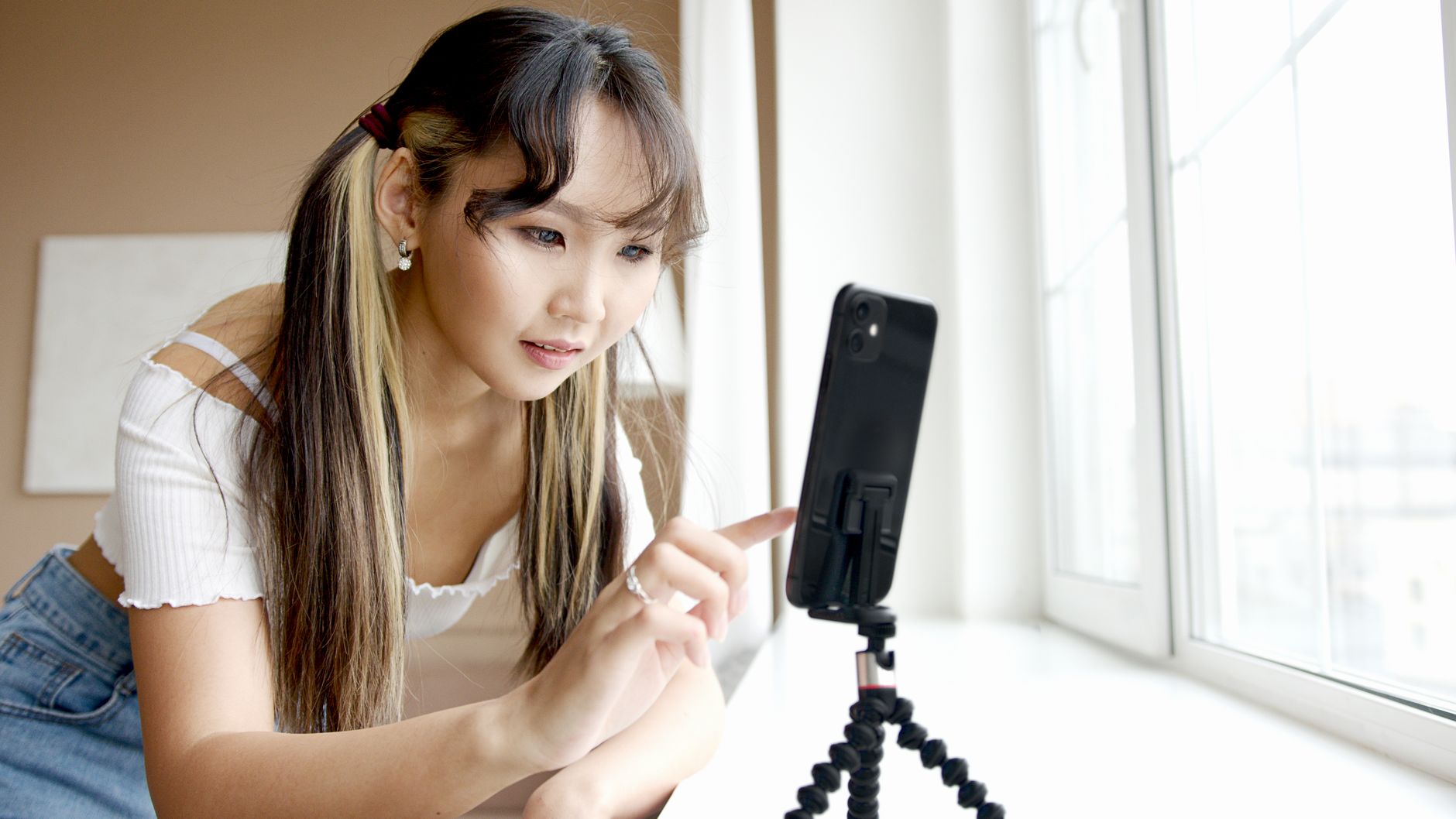
One Light Setup for YouTube: Where to Put a Single Light
A one light setup for YouTube: where to place a single soft light, how to fill shadows for free, and which single lights suit a desk or a room.
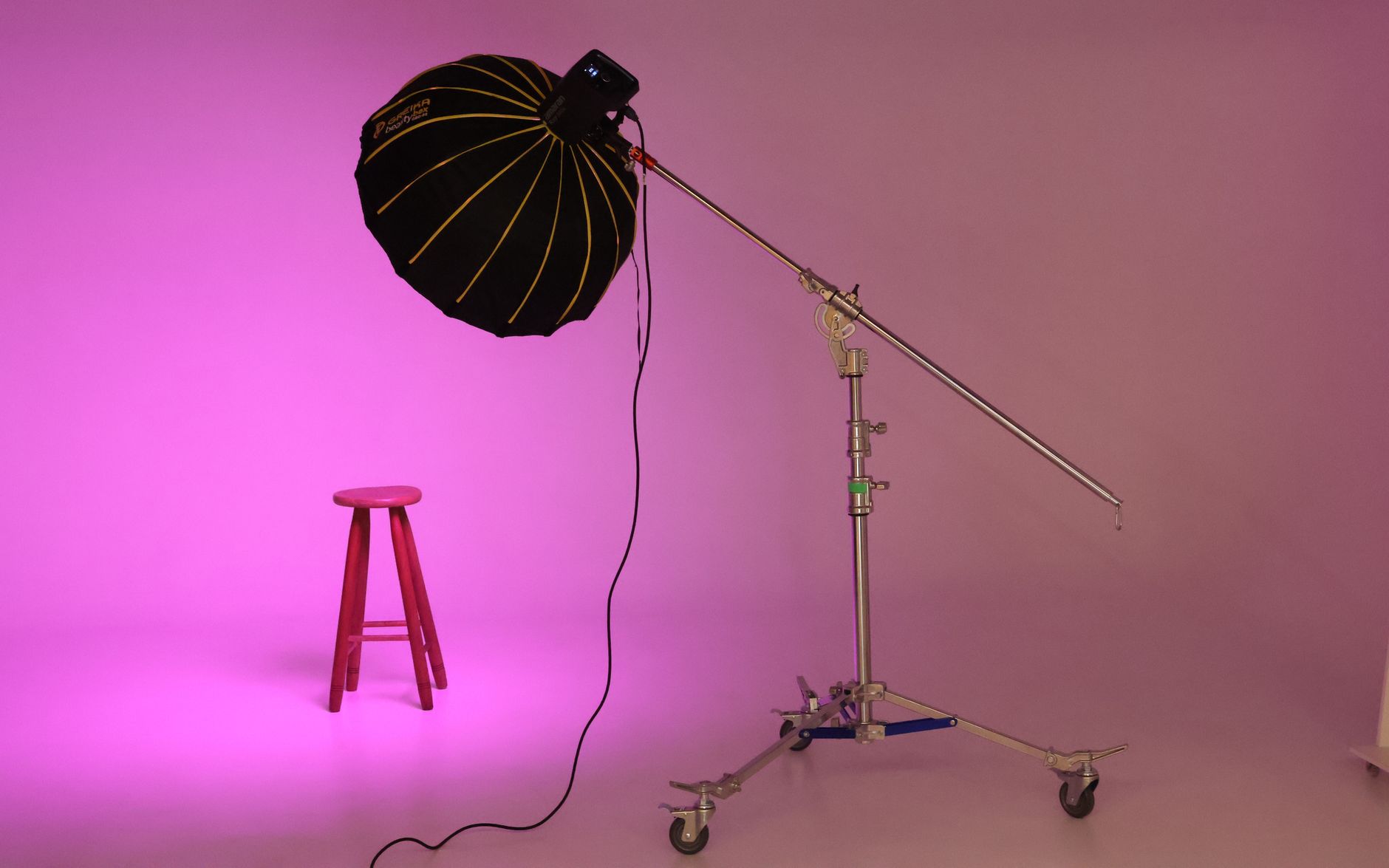
A one light setup for YouTube is the cheapest way to make a talking-head or desk video look deliberate rather than accidental. One soft light, put in the right place, does most of what a three-light studio does for a single person at a desk.
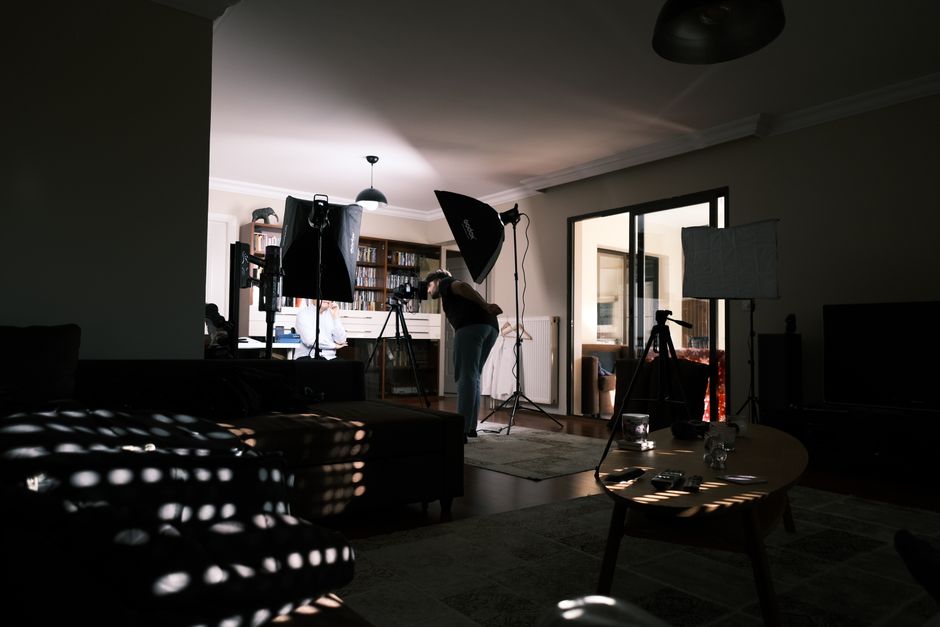
My own channel is mostly voice-led, with some videos of me on camera, so lighting a face with as little kit as possible matters to me. For my lights I went with the RALENO 2-pack of 50×50 cm softboxes, as it's good value and well reviewed. This guide is about the first of those two lights: where one light goes, what fills in for the second, and which single lights suit a desk or a room. It is a research guide, not a test report. What each light does comes from its maker's page and its Amazon UK listing, linked as I go.
Links to Amazon UK are affiliate links: if you buy through one, Creator Kit Lab earns a small commission at no extra cost to you. Prices are as I found them on 3 November 2026 and move daily, so check the current price before you buy.
Can one light be enough for YouTube?
Yes, for one person in one place. A talking head needs three things from light: enough of it that the camera is not straining, softness so the shadows on your face fade rather than cut, and direction so your face has shape. One large source to the side delivers all three.
What one light cannot do on its own is separate you from the background or light two people evenly. Those are the jobs a second and third light take on in a classic three-point setup (key, fill and back light). For a solo creator, a reflector and a sensible distance from the wall cover most of that gap for a fraction of the cost.
The order to spend in is the one from my YouTube starter kit guide: sound first, then light. One good light comes before any camera upgrade, because a phone in good light beats a better camera in a dim room.
Which lighting terms do you need for one light?
- Key light: the main light on your face. In a one-light setup it is the only light. Elgato (a creator-gear brand owned by Corsair) also uses Key Light as a product name.
- Fill: anything that lifts the shadow side of your face. It can be a second light, a reflector, or a white wall.
- Soft light: light from a source that is large compared with your face. Size relative to the subject is what makes light soft, so a softbox close to you is softer than the same softbox across the room.
- Feathering: turning the light so its edge, not its centre, falls on you. The edge of a softbox is gentler and more even than its middle.
- Broad and short lighting: if your face turns slightly away from the camera, broad lighting lights the side nearer the lens and short lighting lights the side further away. Short lighting gives a slimmer, more shaped look.
- Colour temperature: how warm or cool a light is, in kelvin (K). Daylight sits around 5500-6500K; household bulbs around 2700-3000K. My colour temperature and CRI guide covers why mixing them looks wrong on camera.
Where should a single light go?
Start at 45 degrees
Stand the light to one side of the camera, about 45 degrees round from the lens, so it lights your face from the front and side at once. That angle gives your face shape without throwing half of it into darkness.
Raise it above your eyes
Set the centre of the light a little above your eye line and tilt it down. Light from slightly above looks natural because the sun and ceiling lights come from above. Light from below looks theatrical.
Bring it as close as the frame allows
Move the light in until it is just out of shot. Closer makes it larger relative to your face, so the light is softer, and it makes you brighter than the room behind you.
Feather it
Turn the light a few degrees so it points just in front of your face rather than straight at it. The softer edge falls on you, and less spills onto the wall.
Fill the other side
Put a white reflector, a sheet of foam board or a white wall on the side away from the light. It bounces some light back into the shadows without adding a second source.
Kill the other light sources
Switch off the ceiling light and close the blinds if the window is behind or beside you. Your one light should be the only light colour on your face.
Lock the camera
Set white balance to match the light's colour temperature and fix exposure, so the picture does not drift as you move. Then film ten seconds and watch it back on a big screen before the real take.
How do you fill shadows without a second light?
With a reflector. A 5-in-1 reflector is a folding disc with a translucent diffuser and a zip cover in white, silver, gold and black. White gives the softest, most natural fill. Silver bounces more light back and looks crisper. Gold warms the skin, which can clash with a daylight-balanced key. Black does the opposite of filling: it soaks up light to deepen the shadow side when you want more contrast.
The NEEWER 110 cm 5-in-1 reflector (NEEWER is a long-running Chinese photo-accessory brand) has a listing that describes that same white, silver, gold, black and translucent set. At 110 cm it is large enough to fill a whole face and shoulders. A reflector needs holding, so plan for a clamp or a spare stand, or lean it on a chair just out of frame.
You can also fill for free. A white wall a metre or so to the side does the job of a reflector, and so does a large sheet of white foam board from a stationery shop. What does not work as fill is a second, differently coloured light, such as the ceiling bulb or a desk lamp. It adds a second colour of white to your face.
How close should the light be?
Closer than feels natural. Light from a small source falls off with the square of the distance, the inverse-square law: double the distance and you get roughly a quarter of the light. A softbox is not a point source, so the real fall-off near it is gentler, but the direction holds.
That fall-off is useful with one light. With the light half a metre from your face and the wall two metres behind you, your face is far brighter than the wall, and the background drops darker without a second light to control it. Move the same light across the room and you and the wall end up lit almost equally, which looks flat.
Distance also sets softness. A 50 cm softbox half a metre away is a large source next to your face. The same box two metres away is a small one, and its shadows harden. If the light looks harsh, move it closer before you buy anything bigger.
What should you do about the background?
Get away from it. Sitting a metre or two in front of the wall gives the light room to fall off, keeps your shadow off the wall and lets the background read as a darker frame around you.
If the background looks too dark and empty, add a practical: a lamp in shot that is part of the scene rather than lighting you. It gives the eye something behind you and suggests depth. Fit it with a bulb close to your key light's colour temperature, or dim it right down, so it reads as decoration rather than a competing light source.
A desk setup adds one more trap: the monitor. A bright screen in front of you is a cool, blue light on your face. Dim it while you record, or set your key light to match it.
Which single light should you buy?
Any of these will do the job. The choice comes down to whether the light stands on the floor or sits on the desk, and how much space you have. Prices for each are in the sections below.
| Light | Type | Best for |
|---|---|---|
| RALENO 40×40 cm softbox, single | Floor-standing softbox | The cheapest proper one-light start |
| RALENO 50×50 cm softbox, 2-pack | Two floor-standing softboxes | One light now, a fill or second angle later |
| Elgato Key Light Neo with Monitor Mount | Small panel on a monitor | A desk with no floor space |
| Elgato Key Light Air MK.2 | Desk-clamped panel | A permanent desk setup with app control |
| NEEWER 110 cm 5-in-1 reflector | Reflector (the fill) | Any of the above |
A single softbox or the 2-pack?
RALENO (a Chinese maker of budget photo lighting) sells the same design as a single 40×40 cm box and as a pair of 50×50 cm boxes. Both listings state a 50W LED bulb, a 2500K-7500K colour range, a CRI of 97 or more and a 2.4GHz remote. The single kit's stand runs from 16.5 to 60 inches (about 42 to 152 cm); the 2-pack's stands run from 68 to 200 cm.
- Single 40×40 cm, £42.99: the lowest cost of entry, and a small footprint. The smaller box is a smaller source, so it needs to sit closer for the same softness, and the shorter stand tops out around head height for someone sitting, which suits a desk better than a standing shot.
- 2-pack 50×50 cm, £69.99: about £27 more for a larger box on a taller stand, plus a second light you can leave in the cupboard until you want it. That second light is the upgrade path this page keeps pointing at.
The pair is the one I chose. A softbox does need floor space, and two stands either side of a chair take up a lot of it. My budget lighting for product videos post covers the kits I compared before choosing.
Is a desk panel light better for one light?
It is better when the floor is not yours to spend. A panel clamps to the desk or sits on the monitor, so it never needs moving out of the way.
The Key Light Neo (Elgato's smallest panel, 150 × 150 mm) sits on top of a monitor. Its Amazon UK listing gives up to 700 lumens from a 7.5W USB-C port and up to 1,000 lumens from a 3A power supply, a 2900-7000K colour range and a CRI above 94. On top of the monitor it sits close to the camera's axis, so it gives flatter, more frontal light than a softbox at 45 degrees. That suits a webcam-style video, and it is less flattering for a more cinematic look.
The Key Light Air MK.2 (Elgato's 15-inch edge-lit panel, launched in July 2026) is the bigger option. Corsair's launch announcement gives up to 2,100 lumens, a desk mount and three 1/4-inch threads for rigging it elsewhere. Its listing gives a 2900-7000K range. The Neo was £89.99 and the Air MK.2 £129.99 on Amazon UK when I checked. It is a large enough source to work as a proper key at 45 degrees on its own arm.
What are the common one-light mistakes?
- Light straight in front. A light beside the lens flattens the face and puts a bright reflection in glasses. Move it round to 45 degrees.
- Light too far away. A softbox across the room is a small, hard source that lights the wall as much as you. Bring it in.
- Sitting against the wall. Your shadow lands right behind you and the background is as bright as your face.
- Leaving the ceiling light on. It adds a warm top light and a second colour to your skin. Switch it off.
- A window behind you. The camera exposes for the bright window and your face goes dark. Turn round so the window is beside or in front of you, or close the blinds.
- Running an LED very dim. Banding on video is worst at low dimmer settings. Keep the light near the top of its range and move it further away, or use the camera's exposure to bring it down. My frame rate and shutter speed guide covers the settings side.
When should you add a second light?
When the reflector stops being enough. Three cases make a second light worth its floor space: two people on camera, a background you want lit on purpose, or a separate overhead or product shot you film in the same session. For the desk side of that, my YouTube desk setup guide lays out where a second light and an overhead mount go.
Until then, one light set up well beats three set up badly. Put it at 45 degrees, raise it, bring it close, fill with white, and switch everything else off. That is the whole one light setup for YouTube, and it fits in the corner of a spare room.
Frequently asked questions
Is one light enough for YouTube?
Where do I put one light for a talking head video?
What is the best single light for a beginner?
Can I use a window as my one light?
Do I need a reflector with one light?
Sources
- Corsair: Elgato's Key Light Air MK.2 hits the creator sweet spot
- Ulanzi: desk broadcast lighting and eyeglass glare
- Wikipedia: Inverse-square law
- Amazon UK product listings for each product linked above, checked on 3 November 2026
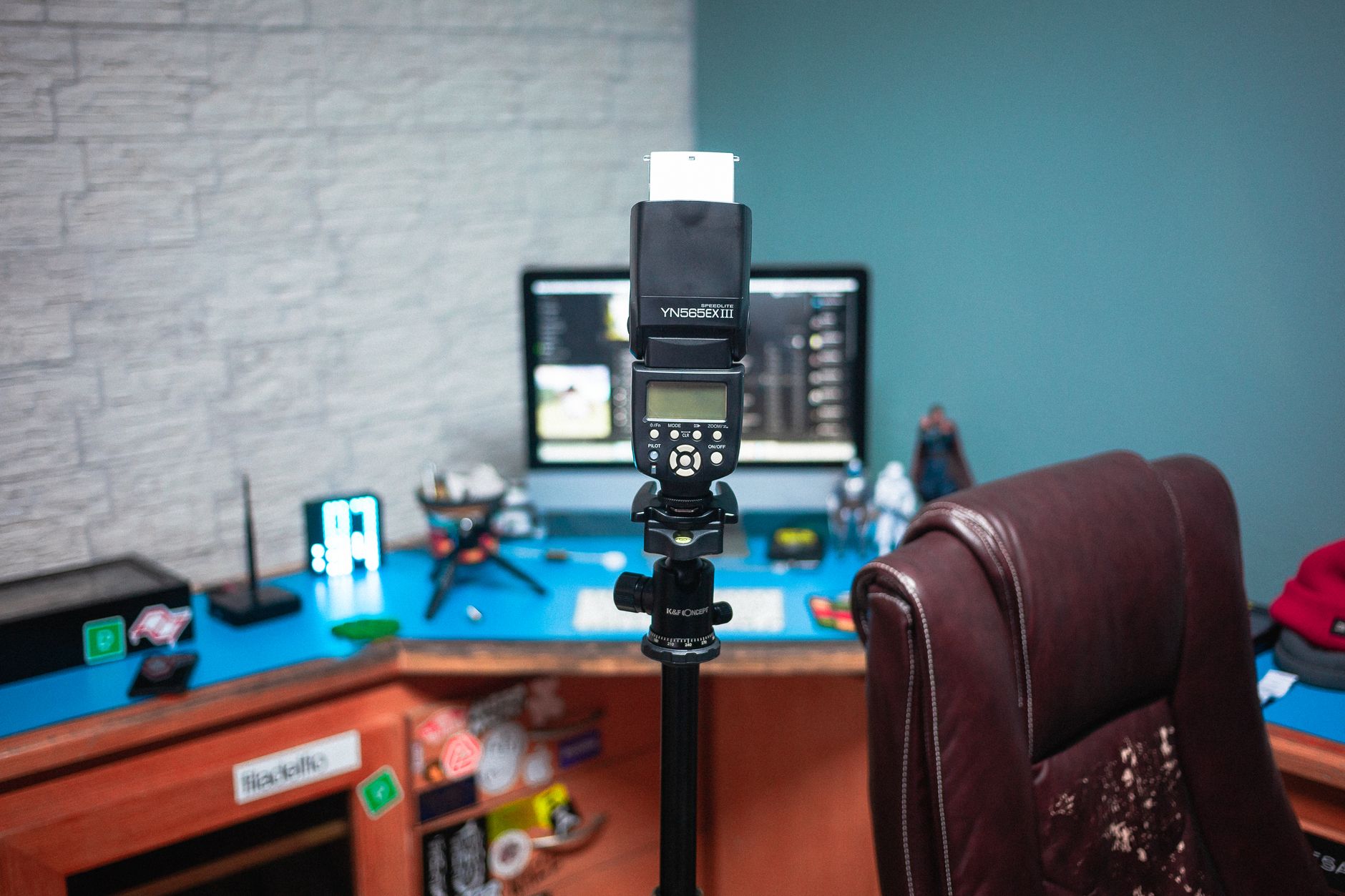
YouTube desk setup
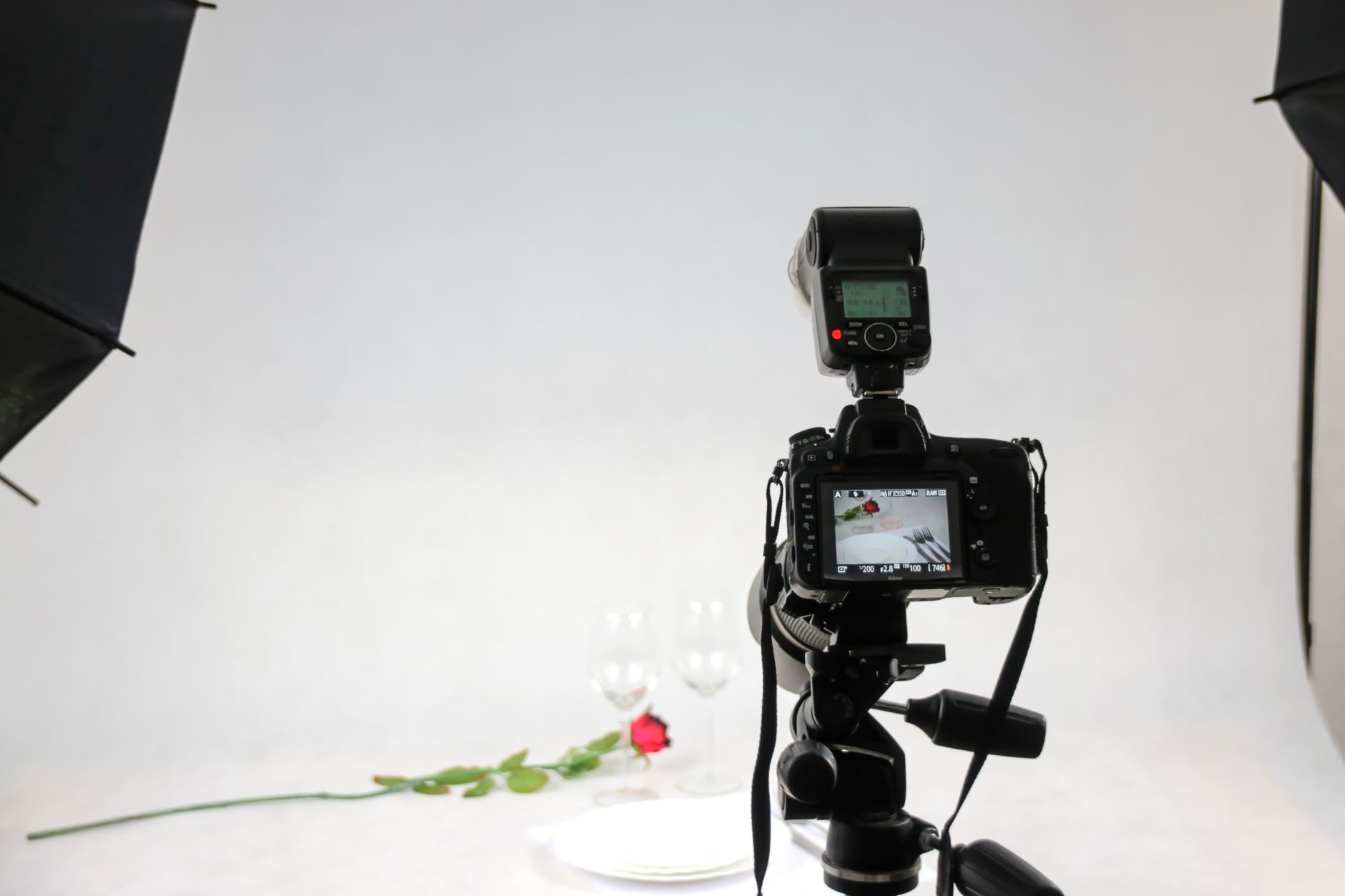
Budget lighting for product videos
Colour temperature and CRI