What Is a Seamless Backdrop? A Beginner's Guide to Sweeps
What a seamless backdrop sweep does, why the curve matters, paper vs PVC vs fabric, and what to check when choosing one for YouTube and product video.
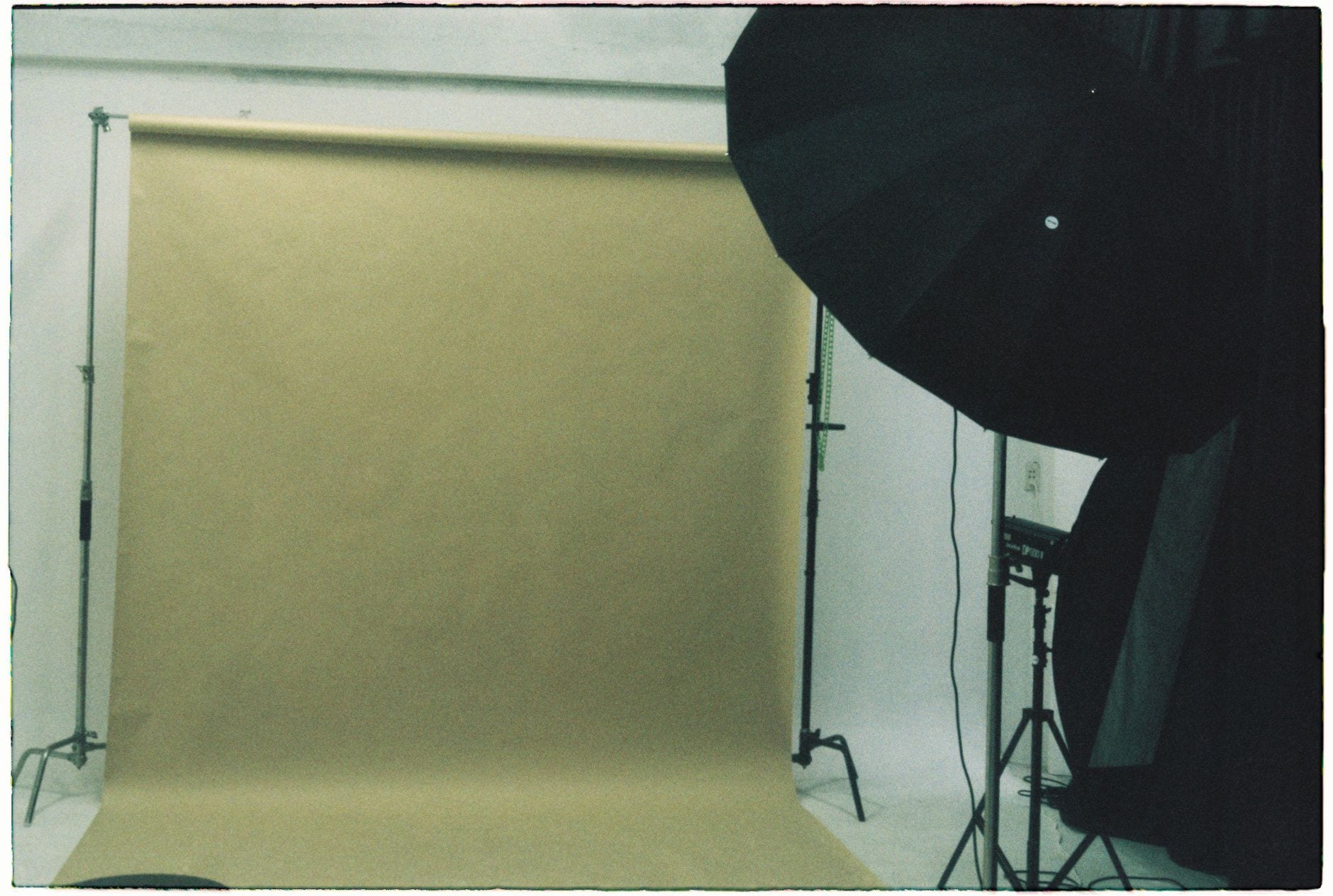
A seamless backdrop is the cheapest way to make a product shot or a talking-head video look like it came from a studio. It removes the clutter behind the subject and, just as importantly, the hard line where a wall meets a desk or floor.
This guide explains what a seamless backdrop sweep does and why the curve matters, the three materials sweeps are made from, the sizes they come in, and what matters when choosing one for YouTube and product video. It names no products and picks no winner: it is the background that makes any backdrop listing readable. Every term is explained before it is relied on.
Five budget backdrops are compared, with a final choice, in the cheap product photography backdrop post, part of the series on what kit you need to start a YouTube channel.
What is a seamless backdrop?
A seamless backdrop is a single continuous surface placed behind and under a subject. Seamless means it has no visible join: no fold, no taped edge, no corner. When the sheet bends in a smooth curve from the vertical surface behind the subject onto the horizontal surface beneath it, the shape is called a sweep.
The same idea goes by several names. Photographers say infinity curve or infinity cove, because a well-lit sweep has no visible horizon, and a permanent, room-sized version built into a studio wall and floor is a cyclorama (often shortened to cyc). A tabletop sheet a metre wide and a cyclorama the size of a garage do exactly the same job at different scales.
Product photography platform Arqspin explains the purpose plainly: a product background is curved to minimise edges and shadows, and that curved shape is what gets called a sweep (Arqspin: Product Photography Background Buys and DIYs).
Why does the curve matter?
Put a product on a desk in front of a wall and the camera sees two surfaces and the line between them. That line is the horizon in a tabletop shot. Light falls differently on the upright wall and the flat desk, so the two surfaces show as different shades, and the corner between them catches a dark band of shadow.
A sweep removes the corner. Because the surface bends gradually, light changes across it gradually too, and the camera reads one smooth gradient instead of two planes and a crease. With even lighting the gradient almost disappears, and the subject appears to float on a plain field of colour.
That plain field does three useful things for a new channel:
- It removes distraction. Nothing behind the subject competes for attention, which matters most in product B-roll (the supporting footage cut over a voiceover) where the item is the whole story.
- It makes shots consistent. The same sweep under the same lights gives every product the same look, so a series of videos or thumbnails reads as one channel.
- It saves editing. A clean white or grey background needs far less work to tidy or cut out than a bedroom shelf.
What are seamless backdrops made of?
Sweeps come in three materials. Each one trades price, durability and portability differently, and the material decides more about daily use than the colour or the brand.
Paper
Seamless paper is the classic studio sweep: heavy, uncoated paper sold on a long roll wound around a cardboard tube, called the core. The roll hangs on a backdrop stand, and a fresh length is pulled down for each shoot. Savage Universal (a US maker of seamless background paper and studio backdrops) notes that the core is what lets the roll mount on a stand, and that without one a cut length can be taped to a wall, rolled back up and reused (Savage Universal: Best Backdrops for YouTube Videos).
Paper is the cheapest material per square metre and comes in the widest range of colours. Its weakness is damage: it creases, tears and marks under shoes or heavy products. The usual fix is to cut off the spoiled section and pull down fresh paper, so a roll is used up over time.
PVC (vinyl)
PVC backdrops, also sold as vinyl, are plastic sheets. Tabletop sizes ship rolled in a tube and are curved against a wall or box when in use. PVC is waterproof and wipes clean, which suits food, drinks and anything messy, and it lasts far longer than paper.
The trade-offs are weight, scuffs and flatness. A heavy product can dent the surface, and a sheet that arrives tightly rolled often needs time laid flat, weighted at the corners, before it lies smooth. Many PVC sheets are double-sided with a matte face (a dull, non-shiny finish that scatters light) and a glossy face (a shiny finish that reflects it), explained in the choosing section below. Some listings also warn that PVC is flammable, so keep it clear of hot lamps.
Fabric
Fabric backdrops are usually polyester or muslin (a loosely woven cotton cloth). They fold small, weigh little and scale to room size for little money, which makes them the usual choice for a full background behind a seated presenter.
Fabric is not rigid, so on its own it does not form a curve: it needs a stand, clips or a frame to hold it up and a gentle drape onto the floor. It also shows creases unless it is steamed, ironed or pulled taut, and its weave can show in close-up product shots where paper or PVC would look smooth.
Backdrop materials at a glance
| Paper | PVC (vinyl) | Fabric | |
|---|---|---|---|
| Strengths | Cheapest per square metre, widest colour range | Wipe-clean, waterproof, durable | Light, folds small, room-size coverage |
| Weaknesses | Creases, tears, used up over time | Heavy, scuffs, may arrive curled, glossy face reflects | Creases, needs a stand, weave shows close up |
| Best for | Studio sweeps on a stand, full-length shots | Tabletop product and food shots | Talking-head backgrounds, travel |
Tabletop sweep or full-size backdrop?
Sweeps divide by scale as clearly as by material, and the scale should follow the subject.
- Tabletop sweeps are sheets from roughly 40 cm to a metre or so wide, laid on a desk and curved up against a wall, a box or a clamp. They suit small products: microphones, phone accessories, cosmetics, food. They are also the cheapest true sweeps, because they need no stand.
- Full-size backdrops are paper rolls, long PVC sheets or fabric drops wide and tall enough to sit behind a person. Paper rolls are commonly sold in widths around 1.35 m and 2.72 m. They need a backdrop stand or a wall fixing, and floor space for the sweep to run out in front.
A middle option exists: a long PVC sheet, a couple of metres in length, can run from a desk up a wall to give both a tabletop sweep and a plain background behind a head-and-shoulders shot. It covers less than a true full-size roll but avoids the stand.
What matters when choosing a seamless backdrop?
Once the scale is settled, a short list of points separates one backdrop from another. Work through them in order.
1. Will it fill the frame at your lens?
This is the point most often missed. A camera's field of view is how much of the scene it takes in, and wide lenses take in a lot. A phone's main camera or an action camera sees far more background than a zoom lens set to a longer focal length, so a sweep that fills the frame for one camera can show its edges, and the room around it, on another. Measure the frame you shoot at the distance you shoot, and buy a sweep wider than it. Zooming in a little or moving the camera closer is the free fix when a sheet is slightly too small.
2. Is the table deep enough for the curve?
A tabletop sweep needs depth as well as width: the sheet must run up the wall, curve, and still leave flat space in front for the product. An 80 cm sheet on a 60 cm desk leaves too little room for both a gentle curve and the subject. Match the sheet's length to the surface it will sit on.
3. Matte or glossy?
For video, matte. Video lights are continuous lights, meaning they stay on for the whole shot rather than firing in a flash, and on a glossy surface they show as bright patches called hotspots that move as the camera moves. A matte finish spreads the light evenly. A glossy face has its uses, mainly a mirror-like reflection under a product in still photography, but it is the harder surface to light well.
4. Which colour?
White, grey and black cover nearly every use. White gives the bright, clean look of most product listings, but it only stays white if it is lit: a white sweep with too little light turns grey on camera. Grey is the forgiving choice, because more light makes it lighter and less light makes it darker, so one sheet gives a range of looks. Black makes reflective or brightly coloured products stand out. Savage Universal also points out that a consistent backdrop colour is part of what makes a channel recognisable, so a colour chosen once and kept tends to pay off.
One caution: a strongly coloured backdrop throws a colour cast, a tint of its own colour, onto anything close to it. Keep the subject a little forward of a coloured sweep, and leave saturated colours until the lighting is under control.
5. How will it be held up?
A tabletop PVC sheet can be taped or clamped to a wall or propped against a heavy box. A paper roll or a large fabric drop needs a backdrop stand, which is a separate purchase, or a wall fixing. Count the stand into the cost and the floor space before choosing a full-size backdrop.
6. Where will it live between shoots?
Paper must stay rolled or it creases. PVC rolls into a tube and should never be folded. Fabric folds small but creases where it folds. In a room that is not a dedicated studio, the backdrop that packs away easily is often the one that gets used.
7. Do you also want a green screen?
Chroma key is the editing technique that removes a background of one flat colour, usually green, and replaces it with another image. It needs an evenly lit, matte surface. A glossy PVC sweep is a poor chroma surface because its reflections break up the colour, so a green screen is a separate decision from a product sweep rather than a second use for one.
How do you light a seamless backdrop?
A sweep only looks seamless when it is lit evenly, and that depends more on the lights than on the backdrop. Soft light from a large source, such as a softbox, keeps the gradient across the curve smooth and the subject's shadow soft. A hard, bare bulb shows every ripple in the sheet.
A few habits help with any backdrop:
- Pull the subject forward. Moving the product or presenter away from the back of the sweep lets their shadow fall on the floor of the sweep rather than the wall behind, and keeps any colour cast off them.
- Light from both sides on a tabletop. Two soft lights angled in from left and right fill the curve evenly and keep product shadows short.
- Light the backdrop separately for pure white. To get a white that reads as pure white rather than pale grey, the backdrop needs more light than the subject, often from a light aimed at the sweep alone.
- Set white balance to the lights. White balance is the camera setting that tells it which colour of light counts as neutral white. Set it to match the lights, and turn off room lamps of a different colour, as the colour temperature and CRI guide explains.
The product video lighting guide covers lighting kits for tabletop shots in more detail.
Is a sweep the same as a light tent?
No, though they overlap. A light tent is a small fabric cube with translucent sides and a sweep built in. Lights shine through the walls from outside, so the tent itself diffuses the light, and every shot comes out even, nearly shadowless and identical from one day to the next. The limits are size, since a tent only takes items that fit inside it, and a flat, shadowless look with little shape.
An open sweep with separate lights is more flexible. The light can come from any direction, which gives products more shape and depth, the sweep can take larger items, and a full-size one doubles as an on-camera background. The cost is setting the lights up each time. Many tabletop creators end up using both: a tent for quick, repeatable shots of small items, and a sweep where the shot needs more character or more room. The post on whether you need both a light tent and a backdrop sweep compares the two side by side.
Common seamless backdrop mistakes
- Too small for the lens. The edge of the sheet, or the room beside it, creeps into a wide shot. Check the frame before the product goes down.
- Subject against the wall. Placed at the back of the sweep, a product throws its shadow up the backdrop and sits on the horizon line the curve was meant to hide.
- A tight bend. A sheet that drops steeply from wall to table shows a soft line. Give the curve more room.
- Creases left in. Fabric needs steaming, PVC needs flattening and paper needs a fresh length pulled down. Creases show far more on camera than in the room.
- Under-lit white. A white sweep with too little light records as dull grey. Add light to the backdrop, or choose grey on purpose.
- Folded for storage. A fold in paper or PVC never fully comes out. Roll it.
Summary: how to read any backdrop listing
- Match the scale to the subject: a tabletop sweep for small products, a full-size backdrop behind a person.
- Pick the material for how it will be used: paper for studio rolls, PVC for wipe-clean tabletop work, fabric for portable room-size coverage.
- Check width against the widest lens you will shoot with, and length against the table it sits on.
- Choose matte for video, and white, grey or black before strong colours.
- Count the support: a stand or wall fixing for anything bigger than a tabletop sheet.
- Plan the storage: roll paper and PVC, never fold them.
Frequently asked questions
What is a seamless backdrop used for?
What is the difference between a backdrop and a sweep?
Is paper or PVC better for a seamless backdrop?
What colour backdrop is best for YouTube?
Can a seamless backdrop be used as a green screen?
Do I need a stand for a seamless backdrop?
Sources
What Is a Softbox?
Budget Lighting for Product Videos
The Best Way to Film Overhead on a Phone