Budget Softbox Lighting Kit: The One I Chose
The budget softbox lighting kits I compared for a beginner YouTube channel, their sourced pros and cons, and why I chose the RALENO 2-pack.
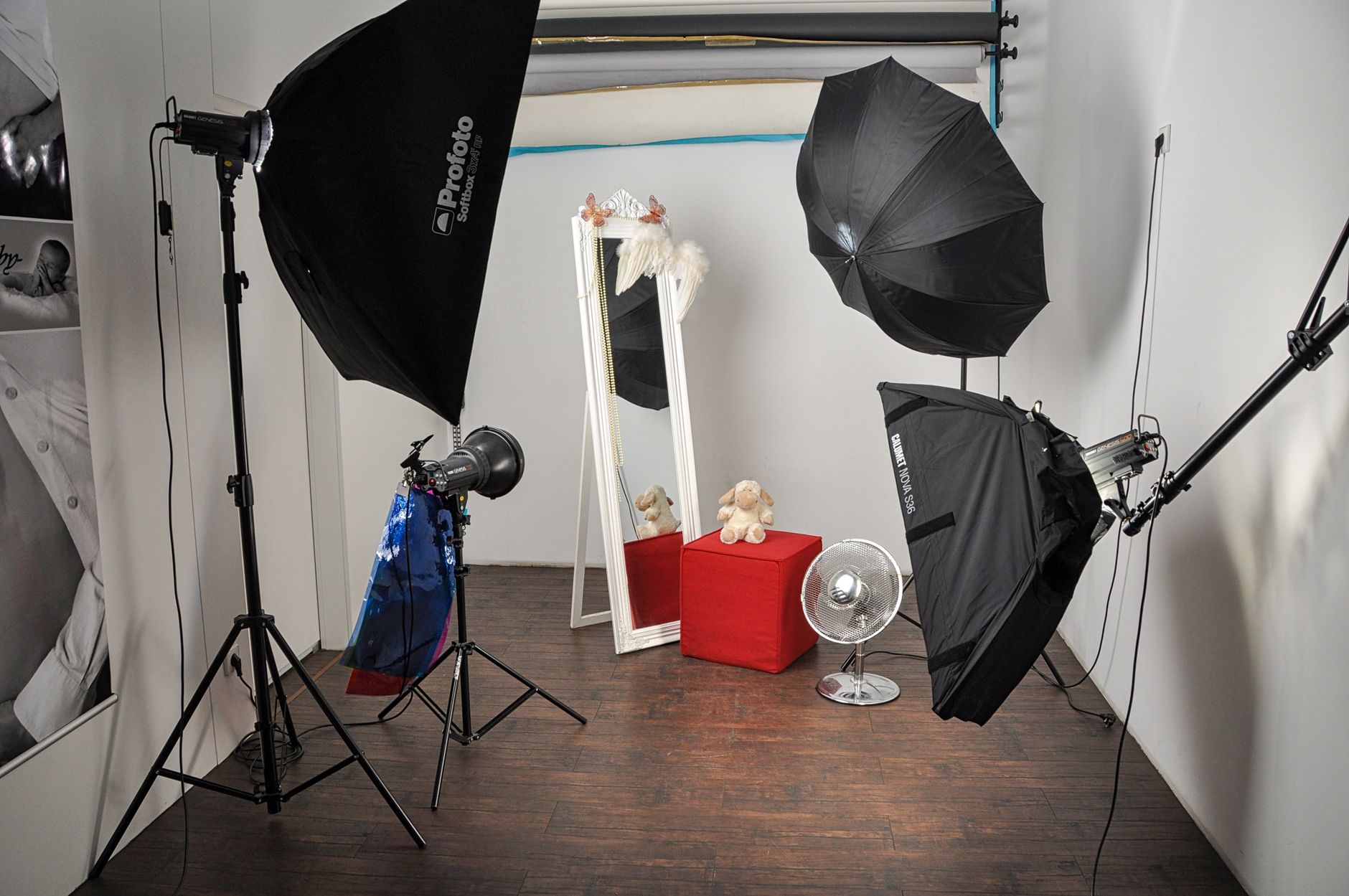
A budget softbox lighting kit was the next piece of my beginner YouTube channel kit. The channel is mostly voice-led with some on-camera videos, and the same kit will also shoot the product footage for the reviews I write on other sites. If you are starting from nothing, my guide to how to start a YouTube channel in the UK covers the steps before any kit.
This post explains what a softbox does, the terms every listing uses, the six kits I compared within a budget of about £50-80, the pros and cons of each, and the one I chose. It is a research comparison: everything below about these kits comes from their Amazon UK listings and published guides, linked as I go, not from filming with them. Links to Amazon UK are affiliate links: if you buy through one, Creator Kit Lab earns a small commission at no extra cost to you. I compared the listings on 30 October 2026, and prices move daily, so check the current price before you buy.
This post is part of my series on what kit you need to start a YouTube channel, one piece at a time. For a longer explanation of softbox shapes, sizes and parts, with no products named, see the explainer what is a softbox?
Which lighting terms do you need to know first?
- Softbox: a fabric box with a reflective lining and one or two layers of white diffusion fabric on the front. Diffusion spreads light out, so a small, harsh bulb becomes a large, soft panel of light.
- Soft light wraps around a face or product and leaves gentle shadow edges. Hard light leaves sharp shadows and bright hotspots. The bigger the light source is next to the subject, the softer the light.
- Key light and fill light: the key is the main light on you or the product. The fill sits on the other side at lower power and lifts the shadows the key leaves. That is why budget kits come as a 2-pack.
- Bi-colour: a light whose white can be set anywhere from warm (orange) to cool (blue). Colour temperature is measured in kelvin (K): around 2700-3000K is warm room light, around 5500-6500K is daylight from a window. A bi-colour light can match whichever light is already in your room.
- CRI (colour rendering index): a score out of 100 for how faithfully a light shows colours. A low CRI makes skin look grey or green and shifts the colour of products. Around 95 or above is the usual target for video. My guide to colour temperature and CRI goes deeper.
- Real watts vs "equivalent" watts: real watts are the power an LED bulb actually draws. "Equivalent" watts compare it to an old incandescent bulb and read much higher. Compare kits on real watts, or on lux (a measure of how bright the light is at a set distance).
- E27 socket vs Bowens mount: every kit in this budget has a screw-in bulb socket (E26 or E27, the same screw fitting as a household lamp) inside the box. The Bowens mount is the bayonet fitting that LED studio lights and their modifiers use. A screw-in kit's boxes will not fit a Bowens light later, so an upgrade means new softboxes as well as new lights.
- 2.4G remote: a wireless remote, on the same 2.4GHz band as Wi-Fi, that sets brightness and colour from your seat.
What does a softbox do for a beginner YouTube channel?
A softbox turns a small light into a large, soft one. SmallRig's softbox guide (SmallRig is a camera-accessory maker) describes the same construction every kit here uses: a reflective interior, white diffusion on the front, and in many models a honeycomb grid to stop light spilling where you do not want it. Size sets softness, so a 50 cm box beside a seated presenter or a tabletop product is already a large source.
For a voice-led channel, a softbox earns its place on the on-camera videos and on product footage. It does nothing for a voice-only video. Phone sensors, entry-level DSLRs and action cameras all have small sensors or modest low-light performance, so more soft light indoors is the cheapest way to cleaner footage from the camera you already have. If you only want to start with one light, my one-light setup guide covers where to put it.
Every kit in my budget turned out to be the same basic design: screw-in LED bulbs inside the boxes, two stands, and a remote. The kits differ on box size, real wattage, colour range and CRI, and those are the specs I compared.
Which budget softbox kits did I compare?
Six kits made the comparison. Specs are from each Amazon UK listing; ratings are as Amazon UK showed them on 30 October 2026.
| Kit | Lights | Box size | Real watts | Colour range | CRI |
|---|---|---|---|---|---|
| RALENO 2-pack | 2 | 50×50 cm | 50W | 2500-7500K | 97+ |
| NEEWER NK103 | 2 | 60×60 cm | 45W | 2900-7000K | 95 |
| Andoer 2-set | 2 | 50×70 cm | 85W | 2800-5700K | Not stated |
| BOLLUMA boom kit | 1 (on a boom arm) | Not stated | 50W | Bi-colour | Not stated |
| FGen octa kit | Not confirmed | 50 cm octagon | 85W | 2700-6400K | Not stated |
| FOTOCREAT 2-pack | 2 | 50×70 cm | Not clear | 5700K | Not stated |
RALENO 2-pack 50×50 cm
The RALENO 2-pack softbox kit comes from RALENO, a Chinese maker of budget photo and video lighting. It pairs two 50×50 cm softboxes with two 50W dimmable LED bulbs, a 2.4G remote, and stands that run from 68 to 200 cm.
- Pros: the listing states a CRI of 97 or more, the highest of the six, and the widest colour range here at 2500-7500K. It was rated 4.4 out of 5 from 784 ratings on Amazon UK, far more ratings than any other kit I compared, and it sat inside my budget. It is dispatched by Amazon, which keeps returns simple.
- Cons: its boxes are slightly smaller than the NEEWER NK103's (50 cm against 60 cm). The listing gives no lux figure, so its output cannot be compared directly with the NK103's. At 200 cm, the stands suit a seated presenter or a tabletop; lighting a whole room needs the bulbs near full power.
NEEWER NK103 2-pack 60×60 cm
The NEEWER NK103 is a two-light kit from NEEWER, a long-running Chinese photo-accessory brand, and it was my provisional pick before I compared anything. It has two 60×60 cm softboxes, two 45W bi-colour bulbs at 2900-7000K, a CRI of 95, one remote for both lights, and a carry bag.
- Pros: the largest square boxes of the set, and the only listing that states its brightness (1400 lux at 1 m). One remote drives both lights on separate channels, and the bag suits moving between sets.
- Cons: on Amazon UK it was priced at roughly double the top of my budget when I compared. It had only 14 ratings, so there was little review evidence, and at 45W it has the lowest real wattage of the bi-colour kits here.
Who it suits better: on paper, someone with a bigger budget who wants the largest boxes and a stated brightness figure, or anyone who finds it at a lower price.
Andoer 2-set 50×70 cm
The Andoer 2-set softbox kit comes from Andoer, a budget photo-accessory brand sold through third-party sellers on Amazon. It pairs two rectangular 50×70 cm softboxes with 85W bi-colour bulbs at 2800-5700K, 2 m stands and a remote.
- Pros: 85W is the highest real wattage of the two-light bi-colour kits I compared, and its rectangular boxes have the largest faces here.
- Cons: Amazon UK did not show its price until it was added to the basket, so I could not confirm it was in budget. Its colour range stops at 5700K, it is sold by a third-party seller, and the listing I read states no CRI. It was rated 4.1 out of 5 from 119 ratings.
Who it suits better: on paper, someone lighting bigger spaces, such as a whole room or a standing presenter, who needs the most power per light.
BOLLUMA bi-colour softbox with boom arm
The BOLLUMA softbox with boom arm comes from BOLLUMA, a small budget lighting brand on Amazon. It is a single 50W bi-colour bulb in a softbox on a stand with a boom arm, with a remote and a carry bag. A boom arm is a horizontal arm that reaches out from the top of the stand.
- Pros: the boom puts the softbox directly above a tabletop, for top-down product shots that a plain two-stand kit cannot light.
- Cons: it appears to be one light, not a key and fill pair, and it had only three ratings on Amazon UK, which is no real evidence either way.
Who it suits better: on paper, someone filming mostly overhead tabletop shots, or anyone adding a top light to a two-light kit later. My guide to filming overhead on a phone covers the camera side of that shot.
FGen 50 cm octagonal softbox kit
The FGen octagonal softbox kit comes from FGen, another budget lighting brand on Amazon. It has a 50 cm octagonal softbox (an octa, which gives round reflections in the eyes) with an 85W bulb at 2700-6400K, and a stand the title gives as adjustable to 300 cm with a 150 cm figure that reads like an arm.
- Pros: an octa is a flattering shape for faces on camera, 85W is plenty of real power, and the cheapest offer on its listing was from other sellers, below my budget.
- Cons: the listing I read did not confirm how many lights come in the pack, and its price came from third-party sellers rather than the main listing.
Who it suits better: on paper, someone who wants a single key light for talking-head videos and will use a window or a reflector as the fill.
FOTOCREAT 2-pack 50×70 cm
The FOTOCREAT 2-pack softbox kit comes from FOTOCREAT, a budget photo-studio brand on Amazon. The box contents list two 50×70 cm softboxes, two bulbs, two 200 cm stands, two remotes and a carry bag, with an E27 socket and 5700K bulbs.
- Pros: large rectangular boxes, a remote for each light, and a bag.
- Cons: Amazon UK did not show its price until it was added to the basket. Its "200W" bulb figure reads like an equivalent rating, not real watts. The listing suggests fixed 5700K daylight rather than bi-colour, and it had only 16 ratings.
Who it suits better: on paper, someone who films only in daylight and wants large boxes, once the real wattage and price are confirmed.
Which kits did I leave out?
Five more softbox kits came up in my search but could not be bought on Amazon UK when I compared: the NEEWER NW48 II and NK200 two-light kits, a Switti LED panel with softbox, a Niceveedi kit with a boom arm, and a Meking mini tabletop kit. A kit you cannot buy has no place in a buying decision, so I dropped them.
Which softbox kit did I choose, and why?
I went with the RALENO 2-pack, as it's good value and well reviewed.
On the comparison above, those two reasons line up with the listings: it was the only kit that sat inside my budget with a large body of ratings behind it, and it also has the highest stated CRI and the widest colour range of the six.
Your situation may point elsewhere. If you need the most power for a bigger room, the Andoer kit has the higher wattage on paper. If you mostly film top-down product shots, a boom kit such as the BOLLUMA reaches over the table. If you only film your face and want one light, the FGen octa is the single-key option. For product footage specifically, my guide to budget lighting for product videos covers how a softbox pair works with a light tent.
Frequently asked questions
Do I need two softboxes for YouTube?
What size softbox is best for a beginner?
Is bi-colour worth having on a budget softbox?
Can I upgrade a screw-in bulb softbox kit later?
Which budget softbox kit did you choose?
Sources
- SmallRig: what is a softbox? Types, sizes and uses
- Amazon UK listings for each kit, linked in its section above, read on 30 October 2026
Budget lighting for product videos
One light setup for YouTube
Colour temperature and CRI